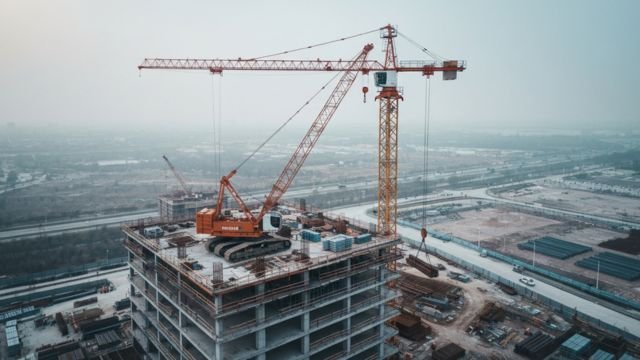

Demolition work in dense urban environments presents a unique set of challenges. Limited access, neighbouring structures, live traffic corridors, and strict safety controls all demand precision and flexibility. In these conditions, contractors increasingly ask whether luffing cranes are suitable for demolition, not just construction. The short answer is yes, but only when applied correctly. With the right planning, luffing crane hire can be an effective and safe solution for demolition projects in tight spaces.
Understanding the Nature of Demolition in Urban Sites
Unlike new construction, demolition involves unpredictable loads, shifting structures, and constant changes in site conditions. In compact city locations, space constraints often rule out traditional demolition methods such as large excavators or implosion techniques. This is where controlled, top-down demolition becomes essential.
For projects with minimal footprint and close-proximity buildings, luffing crane hire allows demolition to proceed vertically, removing materials in a controlled sequence without oversailing neighbouring properties unnecessarily.
Why Luffing Cranes Suit Tight Demolition Environments
The defining feature of a luffing crane is its ability to raise and lower the jib angle. This allows the crane to operate within a reduced radius compared to fixed-jib tower cranes. In demolition scenarios, this flexibility is invaluable. Materials can be lifted and lowered with precision, even when space is severely restricted.
When considering luffing crane hire, demolition contractors benefit from the crane’s ability to adapt to changing heights as the structure is dismantled. This adaptability supports safe operations in narrow corridors and between existing buildings.
Controlled Demolition and Load Management
Demolition loads differ significantly from standard construction lifts. Instead of uniform materials, cranes handle irregular concrete sections, steel beams, and façade elements. Proper load calculation and lift planning are critical. With luffing crane hire, engineered lift studies ensure that every pick is within safe operating limits.
In many urban projects, luffing cranes work alongside mobile cranes for ground-level handling. Providers offering franna crane hire northern sydney services often complement luffing cranes by managing smaller lifts, internal removals, and site logistics where space allows.
Minimising Oversail and Neighbouring Risk
One of the biggest concerns in tight demolition sites is oversailing adjacent properties. Regulatory restrictions and insurance requirements are strict, especially in residential or commercial districts. The luffing motion significantly reduces this risk by keeping the jib within approved airspace envelopes.
This advantage makes luffing crane hire particularly attractive for demolition projects where boundary constraints are non-negotiable. Combined with detailed exclusion zones and engineered controls, it allows demolition to proceed without disrupting surrounding operations.
Safety Considerations Unique to Demolition Work
Safety is amplified in demolition due to falling debris, unstable structures, and dynamic load conditions. Luffing cranes support safer demolition by enabling controlled removal rather than uncontrolled collapse. Loads are lifted away from the structure methodically, reducing shock loading and risk to personnel.
Experienced luffing crane hire providers work closely with demolition engineers to align crane operations with demolition sequencing. Meanwhile, franna crane hire northern sydney solutions are often used to support ancillary tasks, such as removing smaller components once they reach ground level.
Access, Setup, and Crane Positioning
Tight sites often limit where cranes can be erected. Luffing cranes require careful foundation design and positioning to maximise reach while maintaining stability. Early site assessment is essential to confirm feasibility. For demolition, crane positioning may need to change as the building height reduces.
Engaging luffing crane hire specialists early ensures crane selection and setup align with the demolition methodology. In some cases, a hybrid approach using luffing cranes and franna crane hire northern sydney services delivers optimal efficiency throughout different demolition stages.
Regulatory and Planning Requirements
Demolition using cranes in urban environments requires approvals covering oversail, airspace, noise, and public safety. Authorities often scrutinise crane-assisted demolition more closely due to perceived risk. Comprehensive documentation, including crane configurations and demolition sequencing, is mandatory.
Working with established luffing crane hire providers simplifies this process, as they understand regulatory expectations and can support approval submissions. Mobile crane operators offering franna crane hire northern sydney also contribute by ensuring compliant ground operations.
Cost and Efficiency Considerations
While luffing cranes may appear more expensive than alternative methods, their efficiency in constrained environments often offsets initial costs. Reduced delays, improved safety outcomes, and fewer regulatory issues contribute to overall project savings.
For demolition contractors balancing budget and risk, luffing crane hire provides predictable performance in conditions where other methods struggle. Supplementing with franna crane hire northern sydney services can further optimise costs by assigning tasks to the most suitable crane type.
When Luffing Cranes Are the Right Choice
Luffing cranes are not a universal solution for every demolition project. They are best suited to multi-storey buildings in dense areas where space, safety, and oversail control are critical. When these conditions apply, luffing crane hire becomes a strategic asset rather than just lifting equipment.
By combining careful planning, experienced operators, and complementary solutions such as franna crane hire northern sydney, demolition in tight spaces can be executed safely, efficiently, and with minimal disruption to the surrounding environment.